
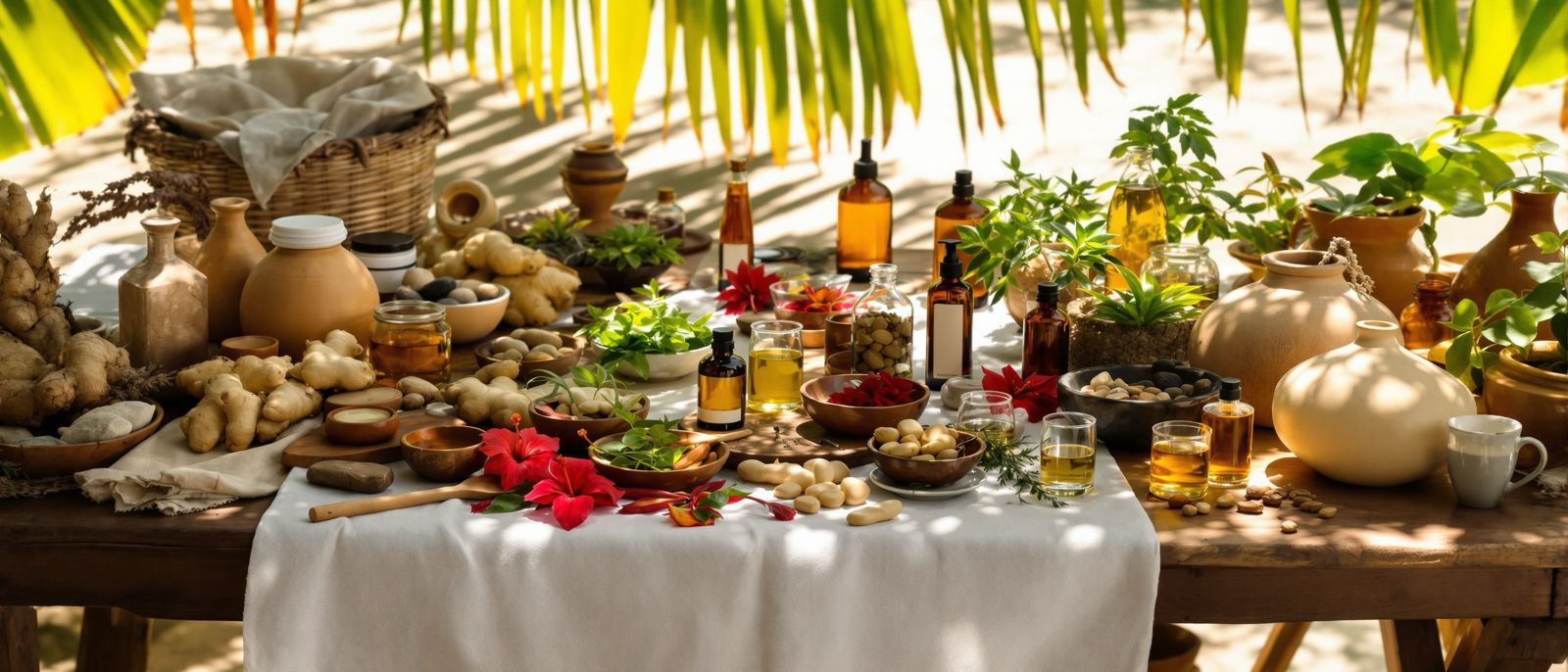
Herbal selection.
Lemongrass, basil, sage, neem, hibiscus, cinnamon bark, dried citrus peel. The cleansing, protective, and fragrant properties of each, read from the leaf and the bark.
Home / Workshops / Abunuhi Yáro
New for the 2026 seasonRevive household ecology through the daily practices our ancestors lived by. Natural detergents, skin oils, hair foods, and ceremonial cleansing with roots and stones. Leave with a working apothecary and the rhythms of a home that tends itself.
The lead instructors of Abunuhi Yáro are master apothecaries of the KWAJI:YÄ K'NÖGÉ Nation: women who have spent decades reading saponin plants, cold-pressing native oils, and tending the household chemistry our grandmothers ran by hand.
By the end of week two, your hands know the work.
Before commercial soap, before pharmacy shelves, before the perfume industry, our grandmothers ran a household chemistry that was complete. Roots cleansed. Leaves nourished. Stones held heat and breath. A home tended itself.
Abunuhi Yáro is a 14-day intensive in that chemistry. You will identify the plants, learn to harvest and prepare them, build the working preparations, and leave with a complete take-home apothecary plus the daily rhythm that uses it.
Two weeks. Smaller circle of fourteen. The pace is intentionally slower than the longer workshops, designed for the body that has been working too hard for too long.
 i.
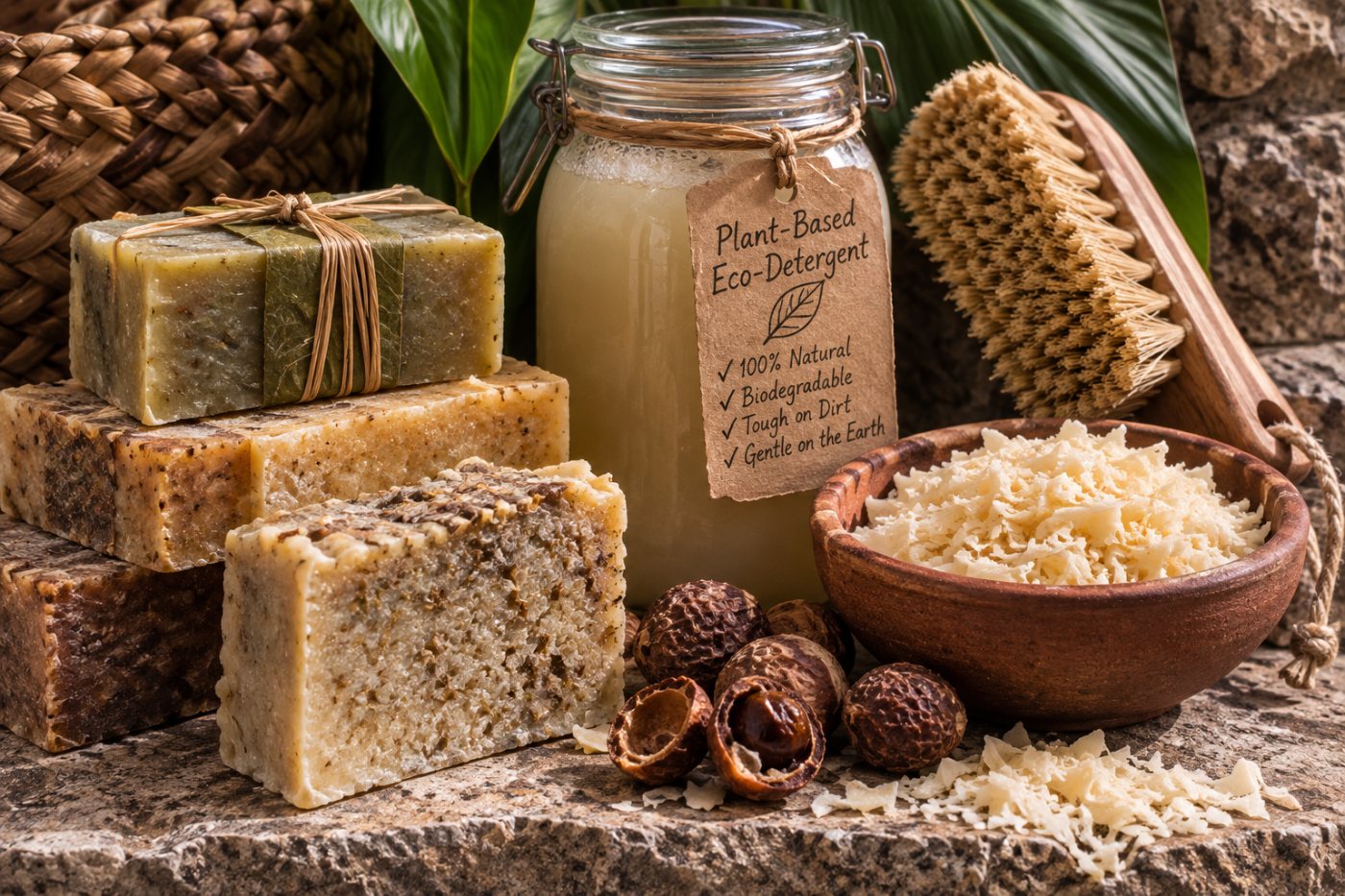
Saponin plants. Wood ash. Root soaps. A clean house without industrial residue.
 ii.
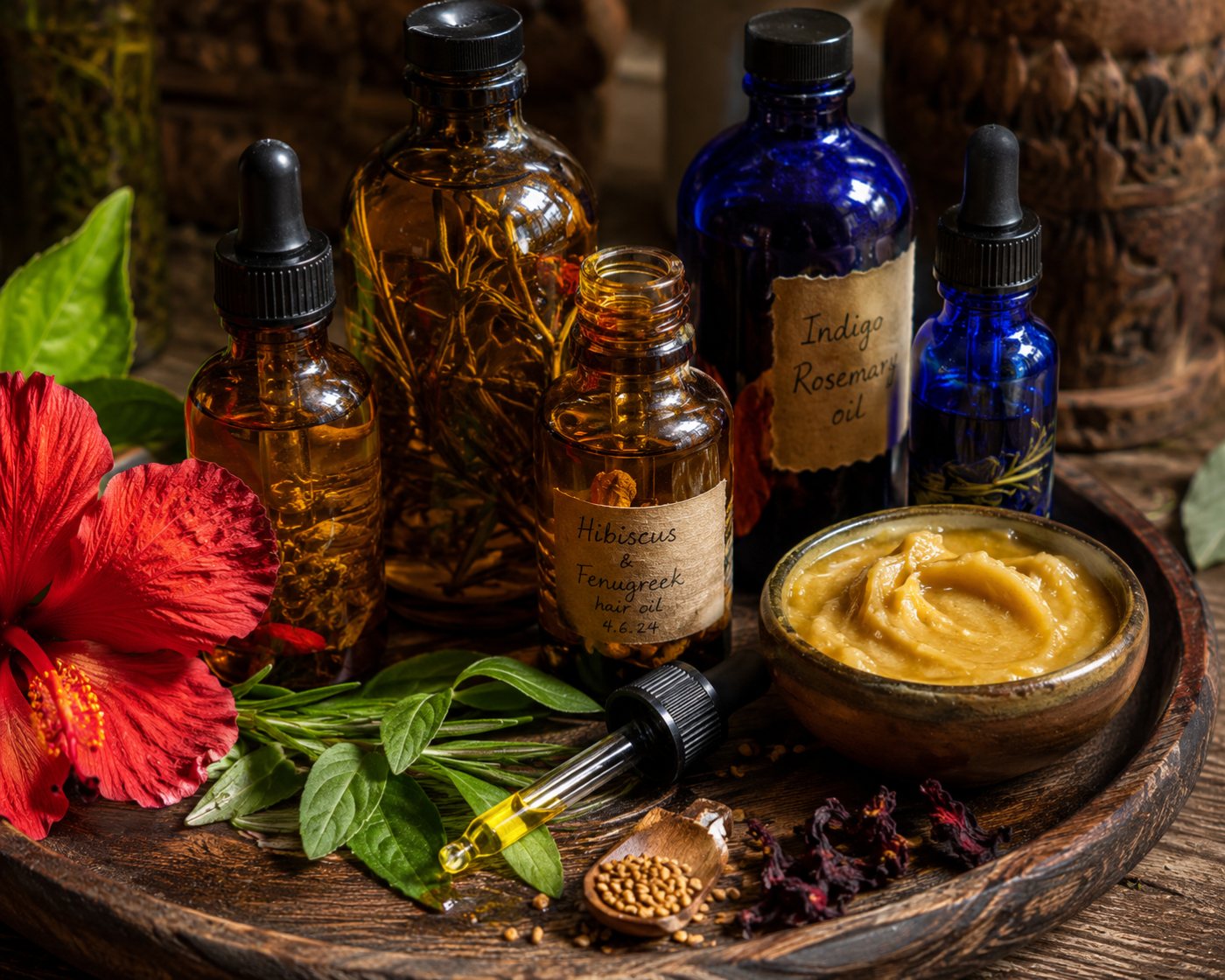
Cold-pressing. Infusing. Salves and balms from native botanicals.
 iii.
Ancestral recipes for scalp and strand. Decoctions and dressings.
 iv.
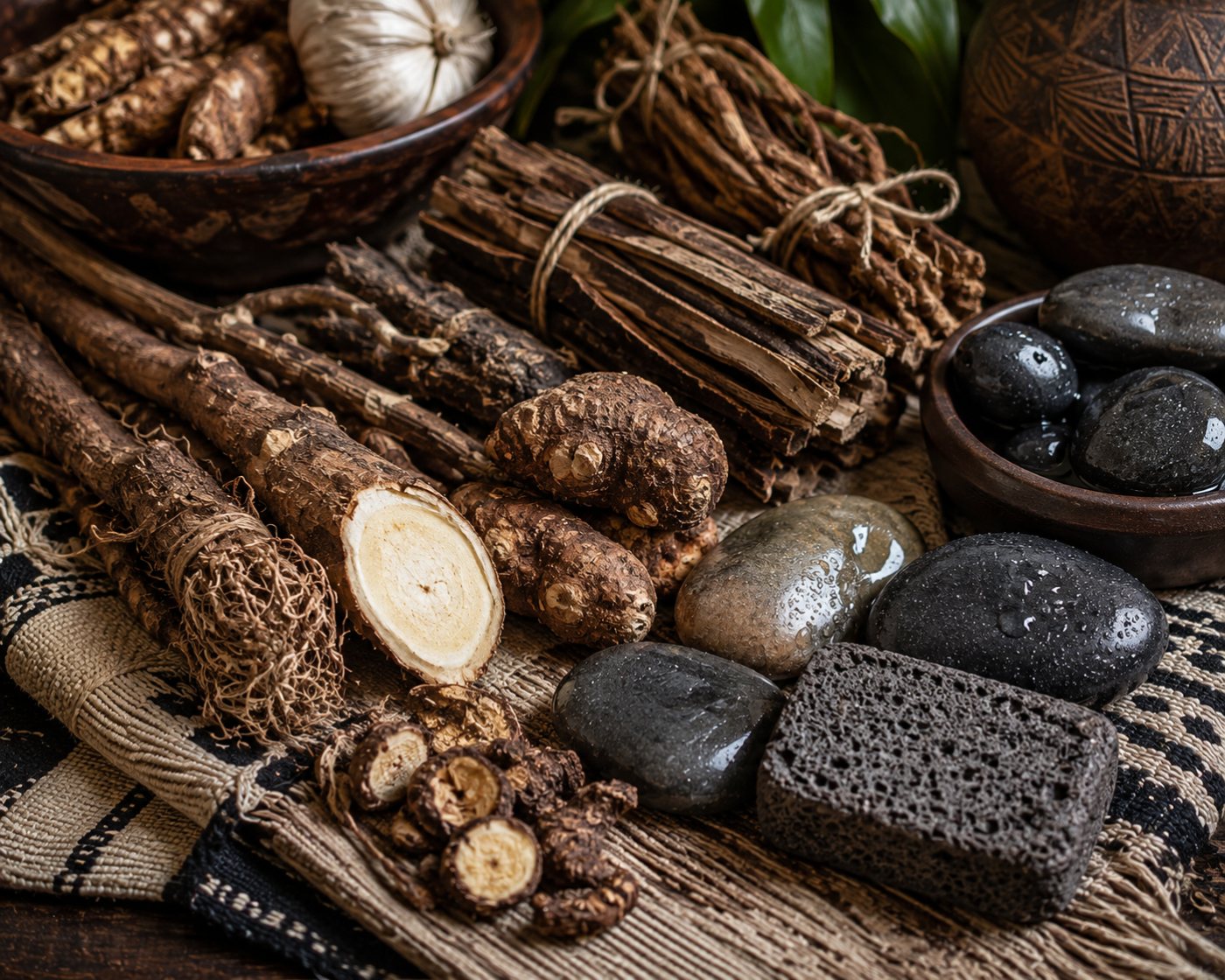
Stones, herbs, smoke, and root water. Held with the proper instruction.
 v.
Building the household altar. The cadence of an Indigenous home.
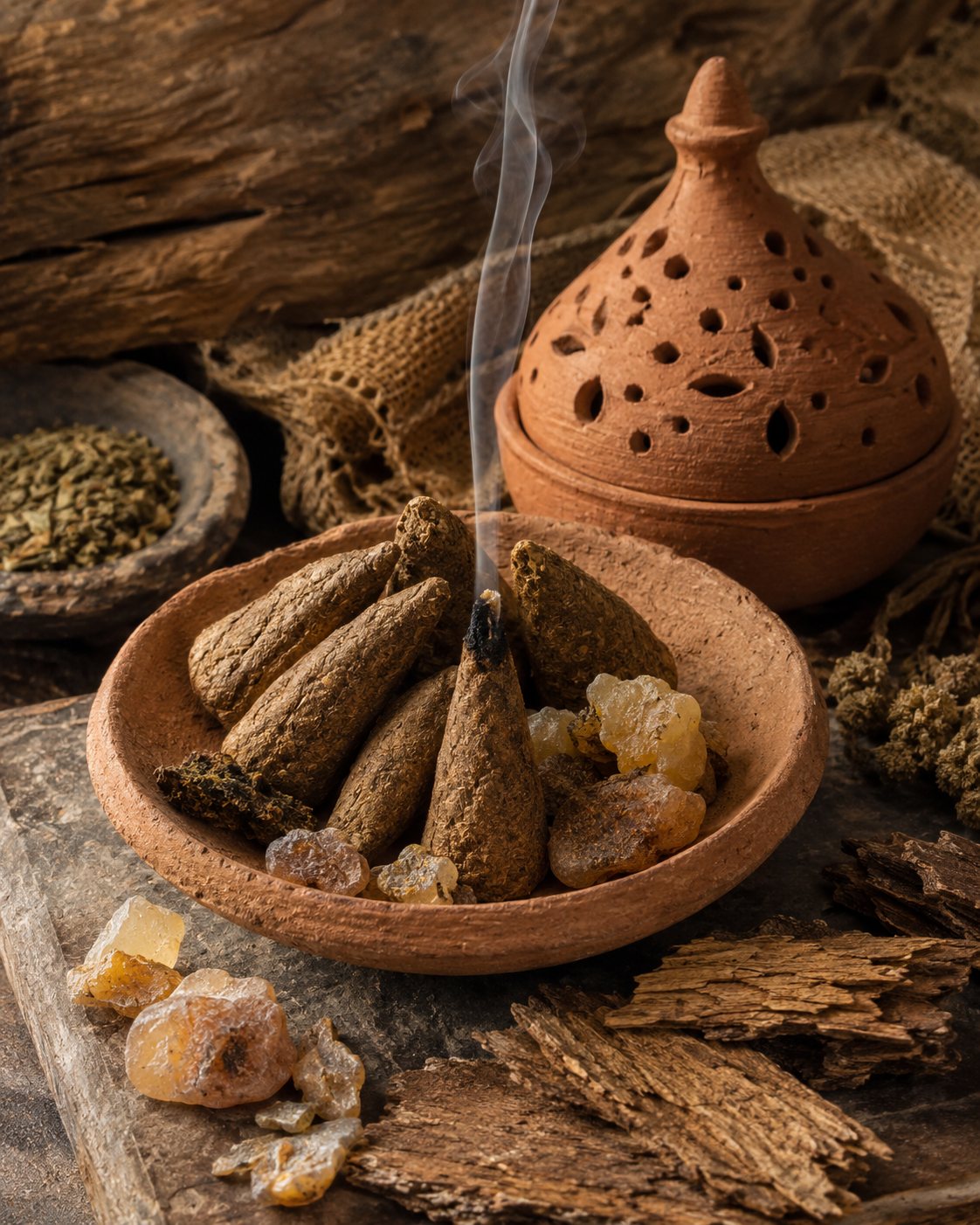
A dedicated thread inside Abunuhi Yáro. Smoke as prayer, cleansing, and covenant renewal. Smoke as fragrance, repellent, and household purification. The continuity of ancestral smoke traditions across Caribbean and intertribal lineages, taught hand by hand.
Lemongrass, basil, sage, neem, hibiscus, cinnamon bark, dried citrus peel. The cleansing, protective, and fragrant properties of each, read from the leaf and the bark.
Loose blends dried for charcoal. Stick incense: powdered herbs bound with gum arabic and cassava starch, hand-rolled onto natural reed splints. Cone incense shaped from herbal powders and clay binders.
Smoke-cleansing of garments, tools, and spaces. The chants and invocations that accompany a smoke offering, held with the proper instruction.
Incense as a working alternative to chemical air fresheners and repellents. Each fellow leaves with a starter bundle of herbs, reed splints, and hand-written recipe cards.
Identifying plants in the wild and on the land. Harvesting respectfully. Decoction, infusion, cold-pressing, drying, storage. The working chemistry our grandmothers knew. By the end of week one, your shelf is built.
Daily rhythm of cleansing, dressing, anointing. Building the household altar. Ceremonial cleansing instruction. Closing apothecary, take-home bundle preparation, and a private one-on-one with the lead practitioner.
Each fellow leaves with a hand-built tropical hardwood travel case: fourteen numbered hand-blown glass jars, a brass scale, a basalt mortar, and a leather-bound twelve-month calendar of practice.
Every participant leaves with a hand-prepared bundle in a hand-stitched cloth pouch. Enough to begin practising at home immediately, and a written guide for the year ahead.
$800 deposit reserves your seat. Final payment due 60 days before arrival. Inaugural circle of the 2026 season.