Ministry of Legal Affairs · Official Sovereign Portal Member Portal ↗

Home  /  Workshops  /  Hiaro Yámoni

Hiaro Yámoni.
Sacred planting.

A 21-day residential workshop in West Indian food sovereignty. Reconnect with the covenant of the seed through soil, water, and planting cycles held in the Caribbean tradition.

Workshopi. of vi.
Circle1 to 21 December
Seats16 in the circle
TuitionFrom $4,800
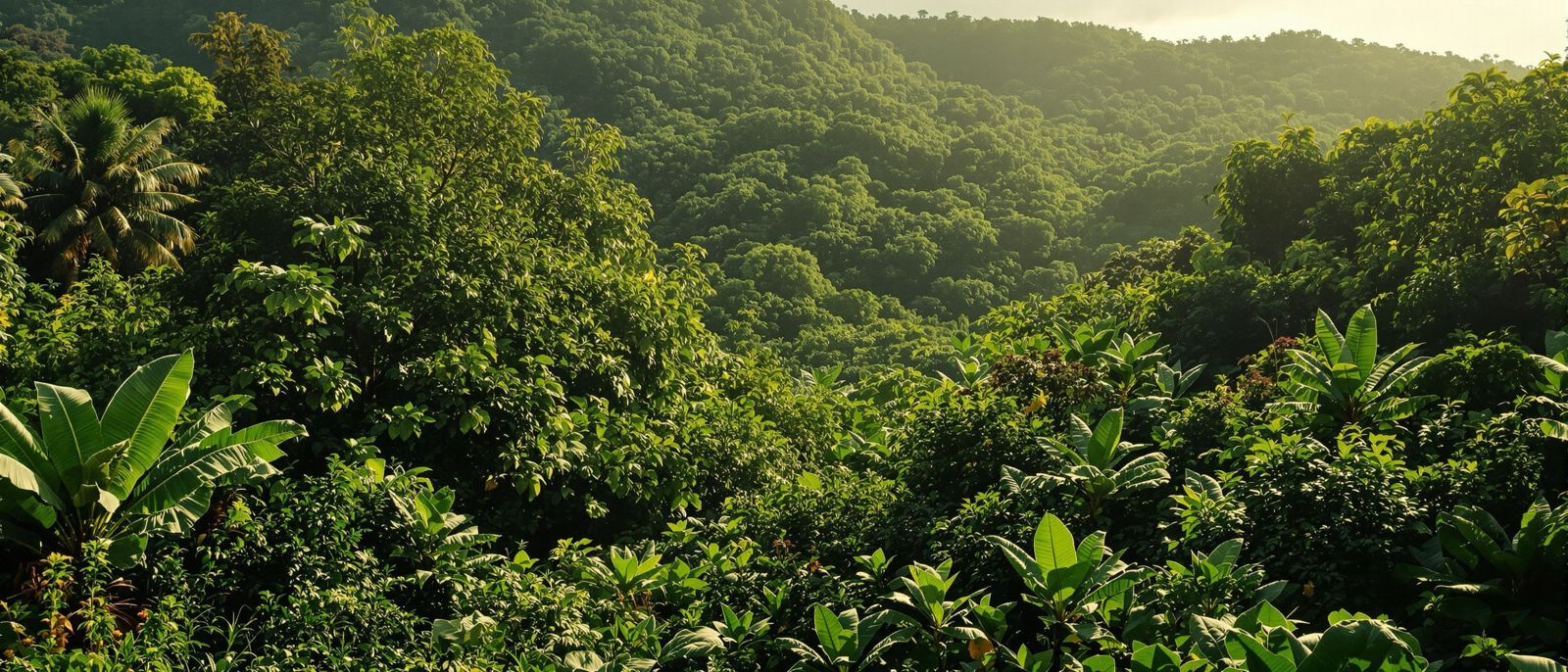
The Hiaro Yámoni workshop leader — a Vincentian master agroforester in her mid-50s — kneeling at the cut edge of a hand-dug terrace bed in the 50-acre terraced food forest carved into the Saint Vincent volcanic mountainside at late golden hour, mid-instruction to the cohort: deep olive cotton work shirt with sleeves rolled, charcoal canvas trousers, terra-rust cotton kerchief over her hair, contemporary leather tool belt at the waist with a refined hand garden trowel and a hand cultivator clipped, holding a handful of dark volcanic loam topsoil cupped in her right hand at chest height, showing the cut soil profile beside her; three cohort fellows in varied brand-palette wardrobe (cream linen-cotton, dark navy cotton, charcoal cotton t-shirt under a cream linen overshirt) seated on the lower terrace step facing her with working notebooks open on their laps; refined hand tools at the leader's side (garden trowel with polished hardwood handle, hand cultivator, small clay seed bowl with saved seeds, folded notebook with pencil); the receding terraces of the 50-acre food forest stepping down the volcanic mountainside in the deep background planted with varied West Indian food crops, mature breadfruit canopy framing the upper-left, distant Saint Vincent volcanic peak at the horizon.
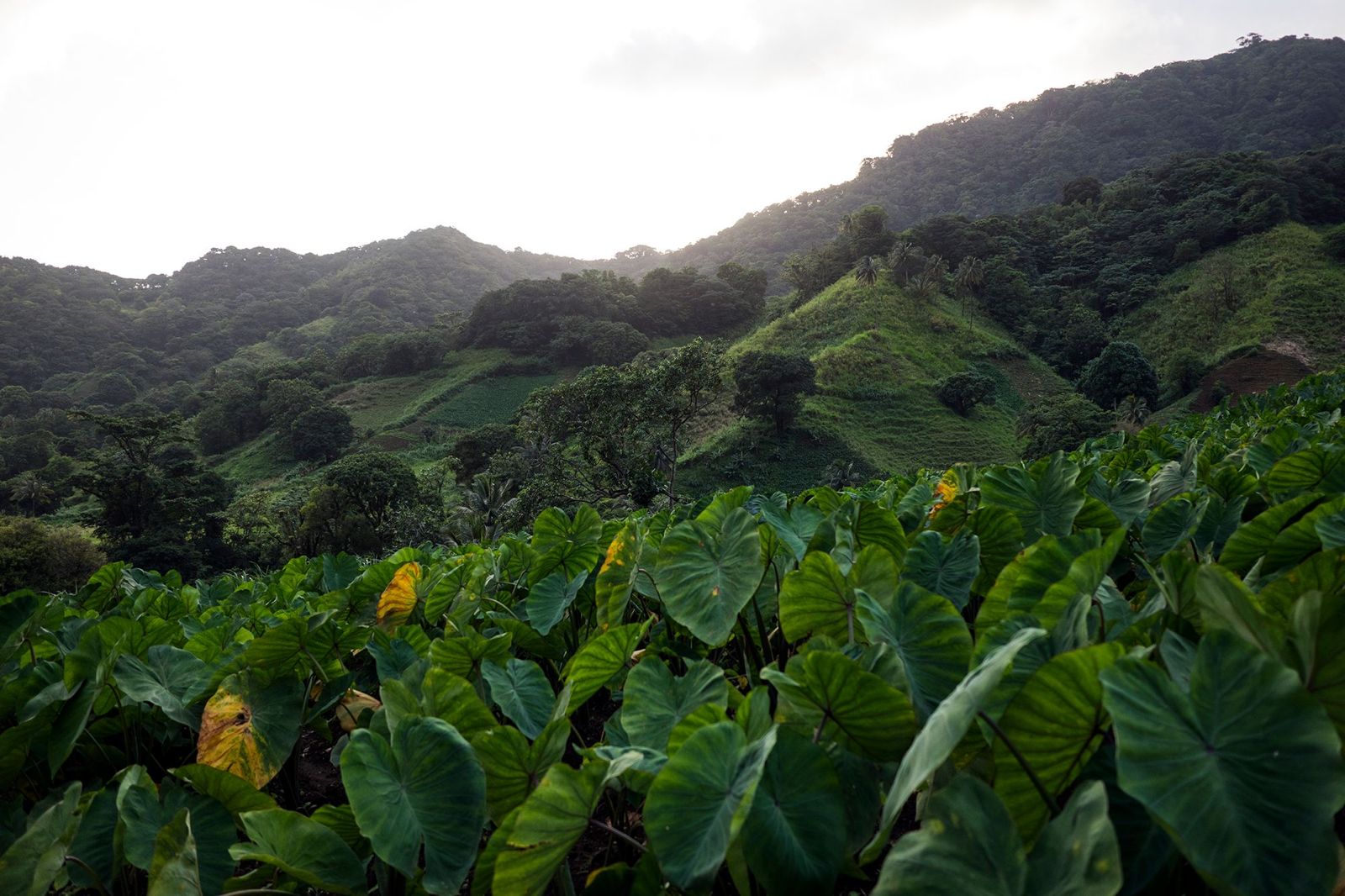
A seedkeeper of the KWAJI:YÄ K'NÖGÉ Nation in an indigo wrap, holding a calabash of saved seed.
The seedkeepers

A lineage of masters.

You will study under seedkeepers who have held this garden through three generations. Each carries a personal seed-bank, a written calendar, and a hand-drawn map of the food forest.

You leave with your own copies of all three, and your name on the wall of the keeper's archive.

The promise

A practice older than agriculture.

Long before agriculture became an industry, the people of these islands tended the land as a relative. Planting was a covenant. Harvest was a return.

Hiaro Yámoni teaches the working chemistry, the seasonal calendar, and the ceremony of a Caribbean garden. By the end of the third week you will have built a complete polyculture bed, learned to read your soil by hand, and carried seed forward into your own keeping.

This is a working immersion, not a spectator retreat. Expect to be in the gardens by 7am most days.

The course

Four arts of the seed.

01

Soil medicine.

Reading soil by hand, color, and scent. Composting from kitchen and field. The bacterial life that holds a bed together.

02

Permaculture and food forest design.

Layering canopy, understory, vine, and root into a complete edible ecosystem. Site reading. Water flow. Light budgets.

03

Herbal gardens and planting cycles.

Ancestral plant relationships. Companion planting. Lunar calendars. The herbal bed as kitchen, medicine, and altar.

04

Seed saving and food sovereignty.

Drying, sorting, and storing seeds across the cycle. Hand-built seed libraries. The patient discipline that lets a household feed itself for generations rather than seasons.

A working three-quarter view of the Hiaro Yámoni polyculture food forest bed on the Saint Vincent terraced mountainside at warm late-afternoon working light: cohort fellows mid-task in the bed reading the four arts of the seed — herbal companion-planting at the foreground, polyculture layering across the bed, the receding terraces of the food forest stepping down the volcanic mountainside in the deep background, mature breadfruit canopy framing the upper edges.
The polyculture bed at Fountain Villa. Soil, layering, and herbal companion-planting in one working frame, tended by the cohort of the season.
From seed to mastery

The circle closes knowing.

Twenty-one days end with each fellow holding a personal seed-bank, a written planting calendar for their home climate, and a hand-drawn map of the food forest they helped extend.

Tight working detail of the Hiaro Yámoni master agroforester at the cut edge of a hand-built planting bed on the 50-acre terraced food forest at warm late-afternoon working light: hands at chest height kneading a rich compost amendment into the dark volcanic loam, the left hand cups a small mound of the working compost-and-loam mix while the right hand breaks the mix apart between fingers, the bacterial life and worm-rich humus visible in real material reality. Continuity wardrobe — deep olive cotton work shirt with sleeves rolled, terra-rust cotton kerchief over the crown. Cut edge of the planting bed visible at the lower edge of frame showing the soil profile in cross-section. Faint polyculture suggestion at the deep upper edge softens into warm late-afternoon bokeh.
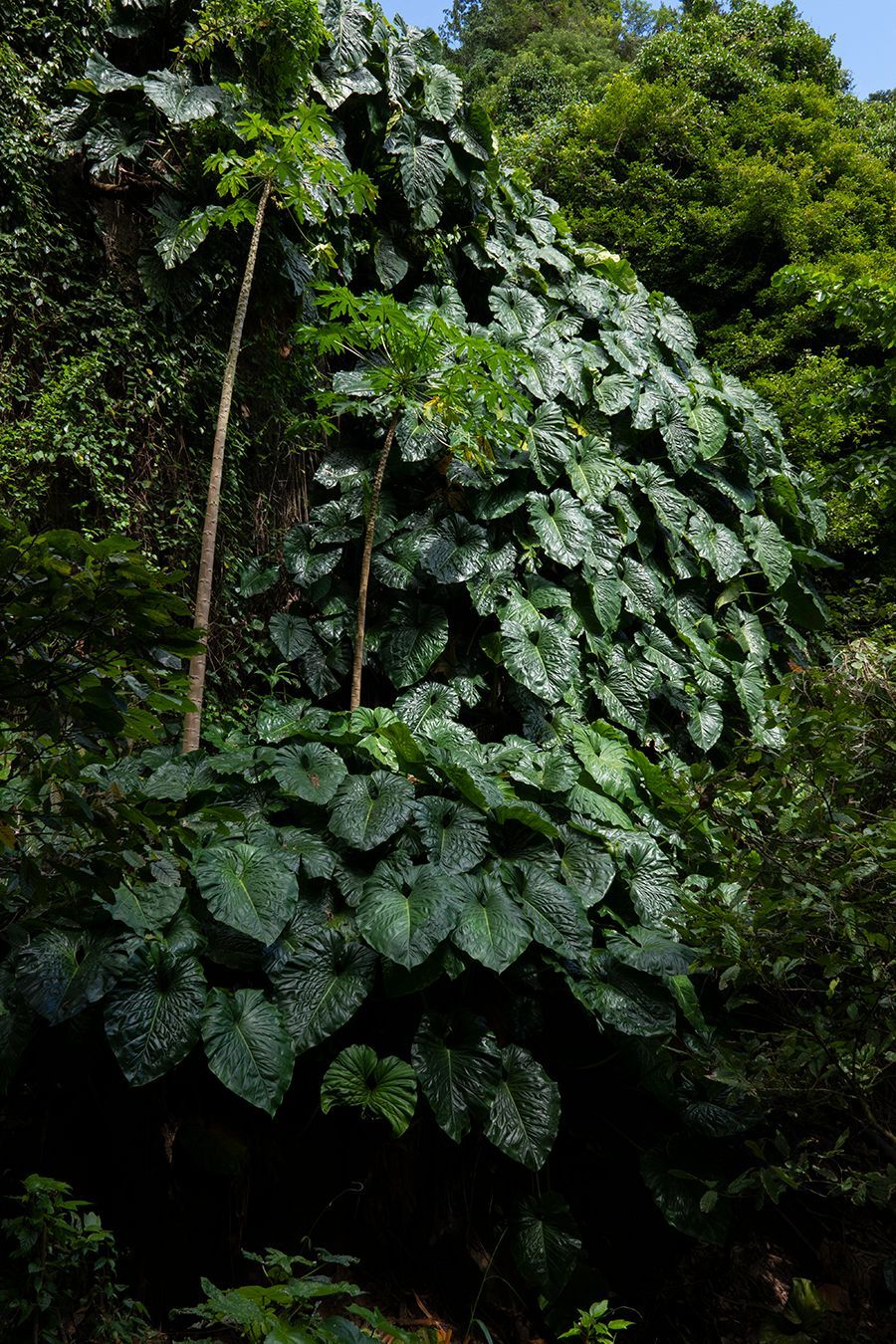
The Hiaro Yámoni master agroforester (continuity figure) at the head of a refined contemporary basalt sorting table on the terrace of the 50-acre terraced food forest at warm late-afternoon working light, working alongside three cohort fellows on the seed-saving practice: the master lifts a small handful of saved seeds from a freshly split-open dried calabash pod in her left hand and pours them into a small clay seed bowl set into the table surface, demonstrating the sorting gesture. Fellow A in a sage tunic to her right splits open another calabash pod between both hands; fellow B in a cream tunic seated across from her sorts saved seeds from chaff into a second clay seed bowl; fellow C in a terra-rust tunic at the far right marks a small wooden seed-library label with a wax-graphite stylus (abstract geometric mark only, no legible letterforms). The basalt table surface holds the working seed library — eight to twelve small clay seed bowls in varied sizes each holding a distinct saved-seed variety (callaloo, pigeon-pea, sorrel, sweet potato slip seed, cassava seed), several dried calabash pods split open and intact at the table's center, a small stack of hardwood labels at the far edge. The receding terraced food forest beds step down the volcanic mountainside in the deep background, mature breadfruit canopy frames the upper edges, the distant Saint Vincent volcanic peak softly visible at the deep upper edge.
Three weeks

Ground. Grow. Return.

Week 1

Ground.

Arrival ceremony on the land. Soil reading, compost building, water cycles, planting calendars. Daily gardens-to-table cooking with the elders.

Week 2

Grow.

Companion planting. Food forest design and first plantings. Pollinator relationships. Pest care without poison. Evening storykeeping.

Week 3

Return.

Seed saving and seed-bank building. Market making for surplus. Harvest festival. Covenant signing and closing ceremony.

Tuition

From
$4,800 USD.

$800 deposit reserves your seat. Final payment due 60 days before arrival. Two partial scholarships per circle, prioritised for participants of Indigenous descent.
Tuition includes
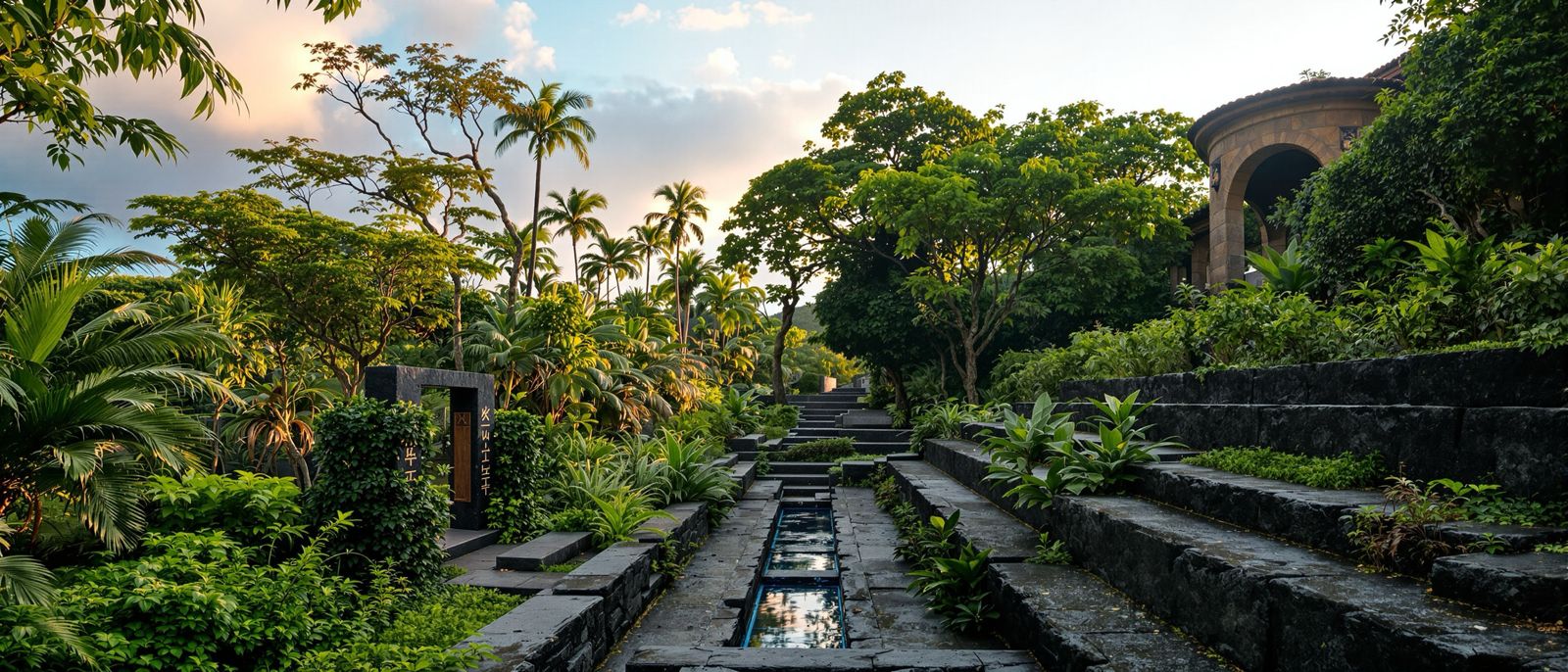
  • Single-occupancy lodging in a hand-built guest dwellingIncluded
  • Three meals daily from the gardensIncluded
  • All instruction, materials, ceremonial elementsIncluded
  • Transfers from Argyle International Airport (SVD)Included
  • Take-home seed bundle and welcome hammockIncluded